
WHERE FORMAL & INFORMAL MEET
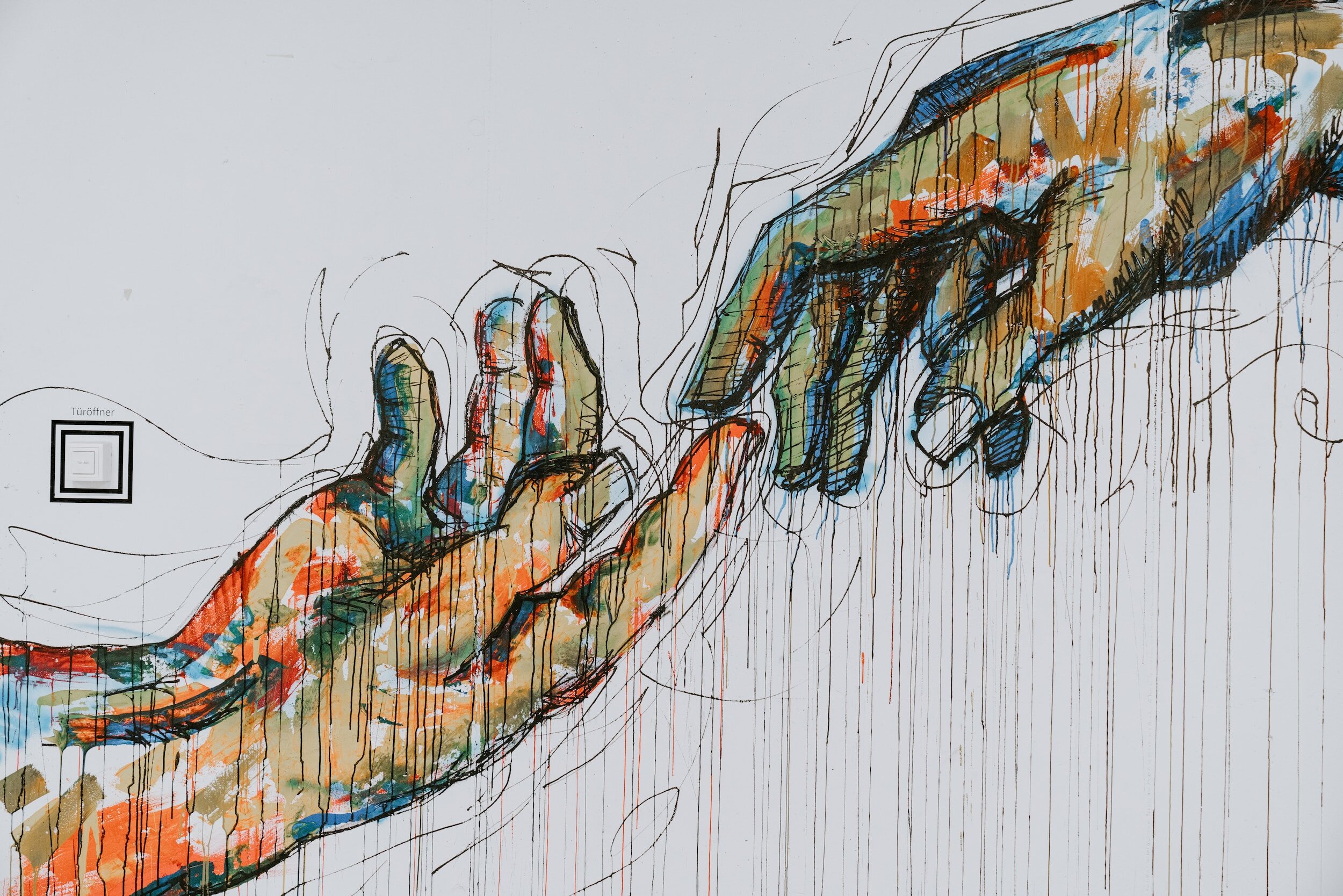
The Gathering is an experiment of two church traditions (formal & informal) working together in a new kind of way. We think there is a beauty and timeless quality to some of the formal liturgical patterns of the historical church. We also think there is an expressive freedom to informal patterns and styles that help us stay flexible and adaptive. We are where formal and informal meet.
OUR ORIGINS
The Gathering originally started in the Fall of 2023 as a partnership between two churches: one from the ELCA Lutheran tradition (Zion Lutheran Church) and one from the non-denominational Stone-Campbell Movement (Pathways Church). What originally began as an experiment has grown into a community of it’s own. Over half of those in the community today have no historical background with either of the original congregations that started it. Who we are today is not who we started as, and that’s been the best part! We can’t wait to be part of what is next.
OUR VIBE
We usually describe the vibe of our community with two word: CAUTIOUS & CURIOUS.
CAUTIOUS:
Many of us grew up in religious environments or surrounded by religion and while we’ve often seen religion used in positive, helpful, beneficial, and inspiring ways, many of us have also seen the less charitable side of organized religion. Many of us have been personally hurt by organized religion (even religion with Jesus’ name on it) or have people in our lives that we love who have been.
Because of that, many of us find ourselves a little bit cautious about organized religion. Some would even say skeptical. Of course, as a church, we ARE an organized group of religious people. We don’t try to pretend that we are not. But, we’ve decided that if we are going to organize ourselves that way that we will be a little cautious about it. We think that tension is healthy.
CURIOUS:
We are a group that knows we don’t have all the answers to everything. In fact, we don’t think anyone does. We think faith is most helpful when it helps us ask better questions, not just gives us easy answers. So we like to practice being unusually curious. We are curious and ask questions about God, the Bible text, the faith commitments handed down to us, and each other. We know that each person has had unique life experiences, so we attempt to be curious about one another because there is probably something that other people know (that we don’t yet) that would be beneficial to us.
We ask questions about things we don’t know, but more often, we ask a lot of questions about things we thought we already knew. We’ve discovered that in the familiar and unexamined is where our blindspots are often hiding.
OUR FUTURE:
Part of The Gathering has ELCA Lutheran roots and our community as a whole has found a meaningful connection and synergy with the ELCA. The Gathering is in the process of applying to formalize its connection to the ELCA (Evangelical Lutheran Church in America). We have found within this broader church community a freedom to be who we are, a commitment to social justice and inclusion, a deep theological tradition and intellectually honest approach to the Bible text, and a friendship with others.
Many of our people are new to mainline denominational Christianity but are excited to explore this new identity.
ZION LUTHERAN CHURCH OF EVERETT
Started in 1901 in downtown Everett, Zion moved to its current location in the South Forest Park Neighborhood in 1962. Zion is part of the Evangelical Lutheran Church in America (ELCA) and has been a hub for community service (food bank, AA meetings, community meals, etc) from it’s beginning.

PATHWAYS CHURCH
Started in 2006 in Mill Creek, WA, Pathways met in a school cafeteria for about 15 years on Sunday mornings. Pathways is an independent, non-denominational church that likes to explore questions about faith in Jesus. We ask questions about things we don’t know, but more fundamentally, we like to question things we think we do know. We’ve found that there are ways of thinking and believing that have been handed down to us that we’ve never really critically thought about because it’s “just the way things are.” We think it’s necessary to evaluate these things as part of the responsibility of faith and struggle with whether those things fit the beauty of Jesus or need to be re-thought.
